babybay Bedside Sleeper review
The best-built answer to keeping a newborn within arm's reach. Solid beech construction and a clamp system that genuinely doesn't budge — you pay for it, and the useful window is only as long as your baby stays small.
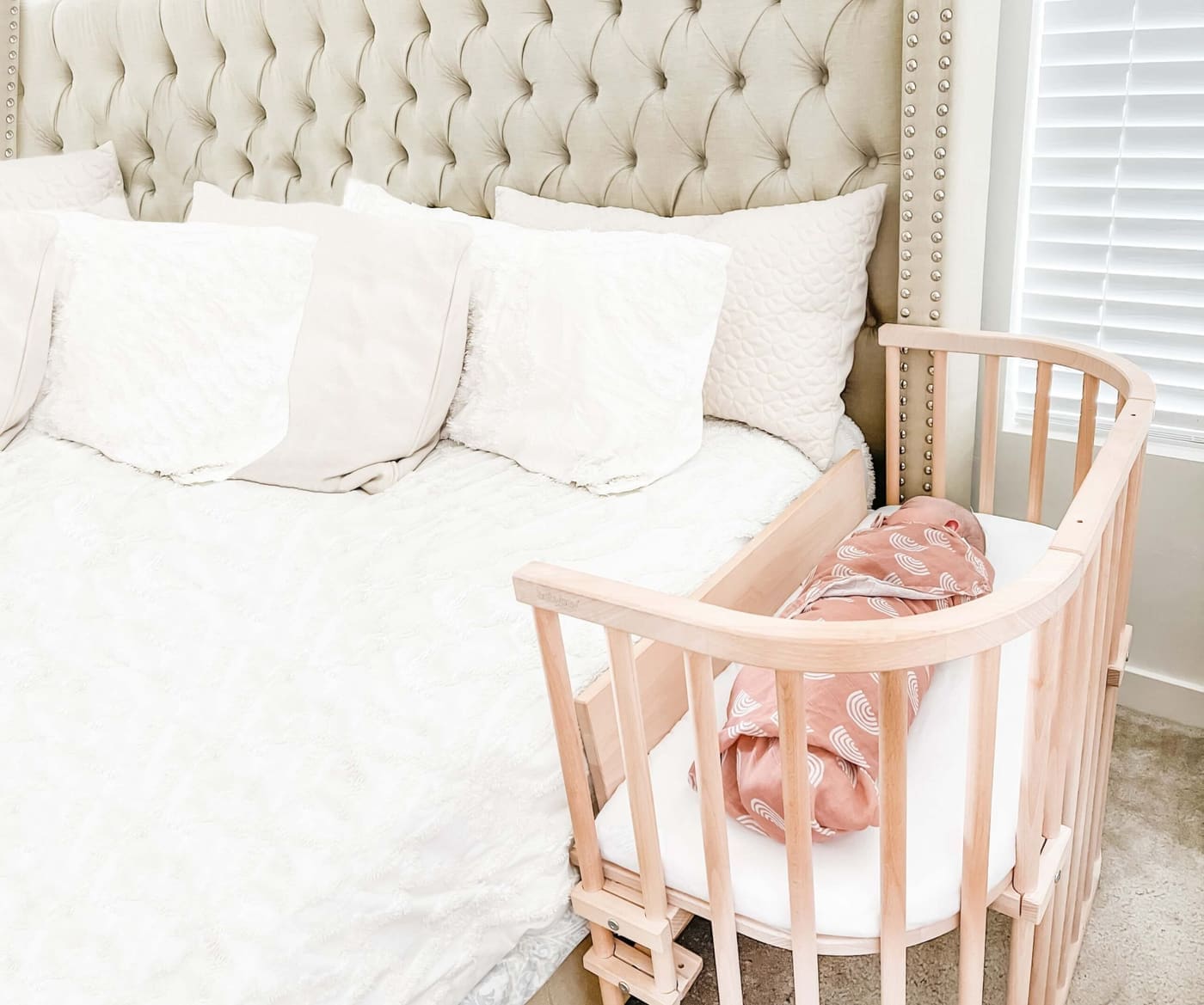
What we like
- Solid wood build quality outclasses fabric competitors
- Clamps rock-solid to virtually any bed frame
- Eco-credible materials and finishes
- Height adjusts to match your mattress precisely
Flaws but not dealbreakers
- Premium price for months of use, not years
- Heavier and less portable than fabric bassinets
- Accessories (mattress, nest, wheels) add up
The bedside sleeper category is split between fabric pack-and-play hybrids and proper furniture. Babybay is firmly the latter: solid beech, real joinery, and a clamping system that fixes the sleeper to your bed frame so securely that our shake tests moved the bed before they moved the bassinet. For a product whose entire premise is holding your newborn at your mattress edge, that solidity is the review.
The reason this furniture exists is worth stating plainly. Mainstream sleep guidance points toward keeping a newborn close by in their own separate sleep space rather than in the adult bed, and a bedside sleeper is the hardware version of that advice: baby at mattress height, within reach, on their own surface. How any family arranges its nights is a conversation for their pediatrician; our job is the equipment, and the equipment question is whether the thing holding your baby at the edge of your bed is rigid, stable and correctly adjusted. That lens also clarifies the comparison shoppers actually face — a pack-and-play with a bassinet insert is a multi-tasker you tolerate, while this is a single-purpose tool you enjoy and then retire.
See where this lands against the field in DaVinci Kalani 4-in-1 Convertible Crib.
Living with it confirms the first impression. The height adjustment has enough range to sit flush with unusually tall adult mattresses, the open side puts the baby genuinely within arm's reach for night feeds, and the wood construction means zero of the fabric-sag that develops in cheaper co-sleepers by month three.
The case against is arithmetic. This is a premium price for a product whose useful life ends when your baby starts pushing up — months, not years. The must-have accessories (fitted mattress, side rail, wheels if you want to move it) are sold separately and add up. And at this weight, 'moving it to the living room for daytime naps' is a two-hand commitment.
Who it suits: parents expecting frequent night feeds who want the reach-over convenience done in real furniture, and households that already know a saggy fabric sleeper would drive them mad. Who should pass: anyone hunting for one product to cover the whole first year, or who plans to shuttle the bassinet between rooms daily — weight is the price of rigidity. The arithmetic softens in two ways: solid beech holds resale value unusually well for baby gear, and a well-kept babybay can serve a second child, which is more than most gear in this life-stage can say. Follow the manufacturer's limits on when the bedside stage ends, treat the height adjustment as something you set carefully per the manual rather than eyeball, and price the fitted mattress and accessories into the sticker before comparing rivals. Decide where it will live before it arrives as well — the whole point is the position beside your bed, so it's the bedroom layout, not the nursery, that has to accommodate it.
If you want the co-sleeping window done properly — stable, breathable-sided, at exact mattress height — this is the best execution we've tested. Buy it knowing it's a short chapter done beautifully, and factor in the resale value solid wood holds.
Key specs
- Type
- Bedside co-sleeper bassinet
- Material
- Solid beech wood
- Attachment
- Clamp-to-frame, height adjustable